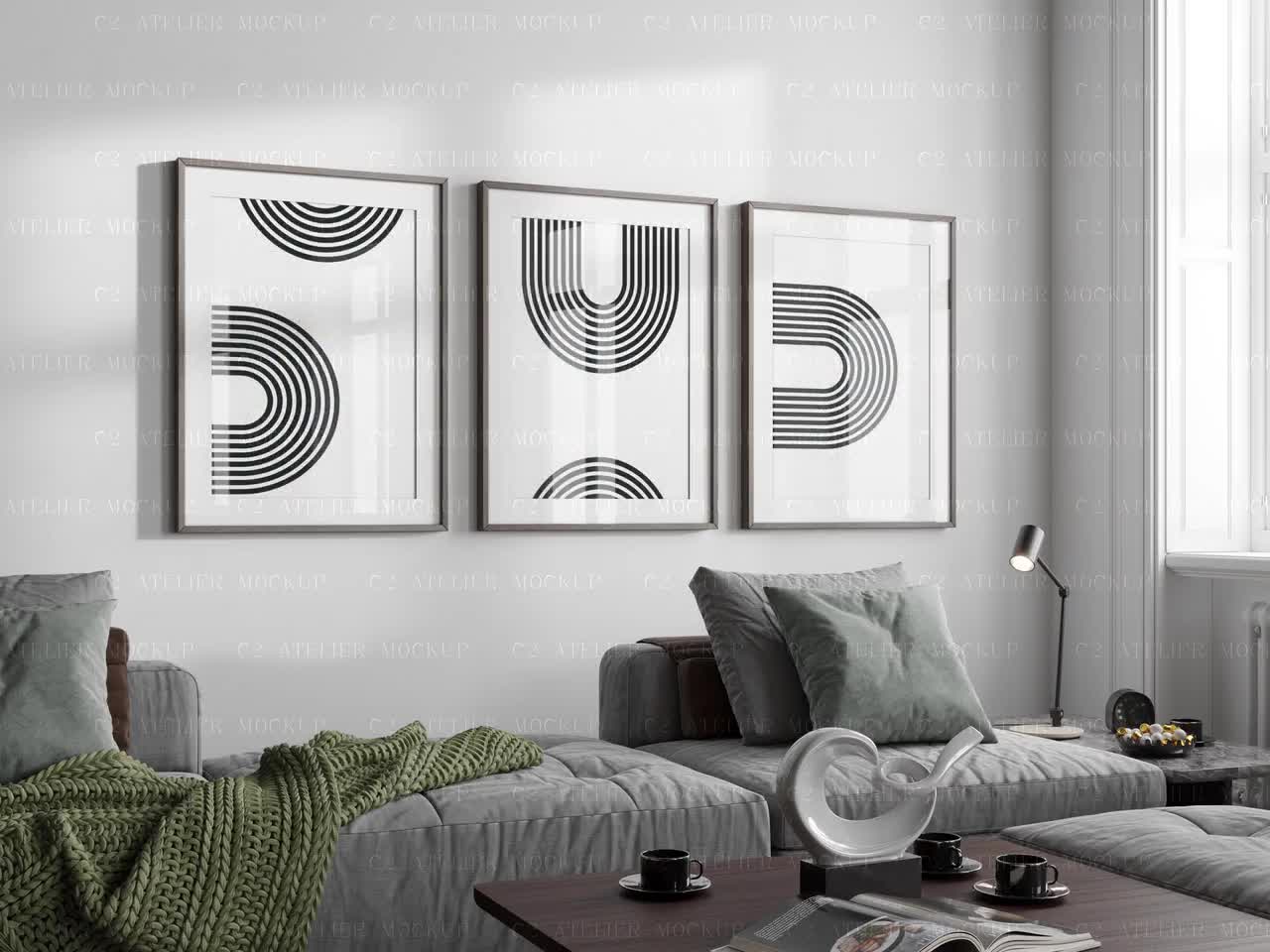
Why Selling the Same Design as Wall Art and a T-Shirt Can Double Your Revenue Per Listing on Etsy
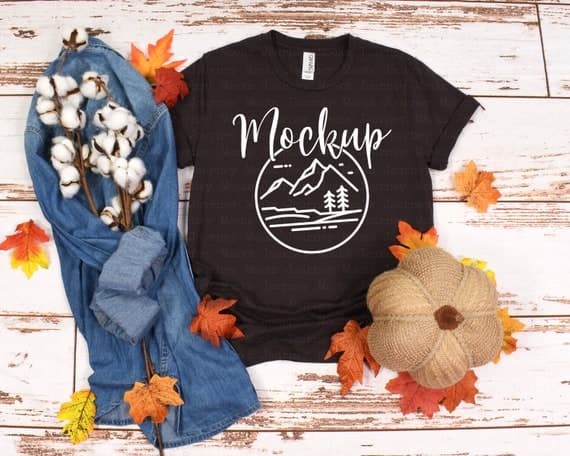
You spent hours on a design. Maybe it was a botanical illustration, a funny quote, or a minimalist landscape. You listed it as a digital print, got a few sales, and moved on to the next one.
Here is the thing though: that design was worth a lot more than one listing.
One of the most underleveraged strategies in print-on-demand and digital product selling is cross-category expansion. The idea is simple. Take a design you already have and sell it in multiple product categories at the same time. Wall art, t-shirts, tote bags, phone cases, mugs. You made the art once. There is no reason it only lives in one corner of your shop.
Done right, this strategy can genuinely double the revenue a single design generates for you, without a single additional hour of creative work. Let's get into exactly how it works and how to execute it well.
The Economics of One Design, Multiple Products
Before we talk tactics, it helps to understand why this works mathematically. Most Etsy sellers think about revenue per design in a linear way. One design equals one listing equals whatever that listing earns. But that is not actually how the math has to work.
Your Design Has Already Cleared the Hard Hurdle
Creating a design is the expensive part of the process, whether you measure that cost in time, money paid to a designer, or both. Once that hurdle is cleared, every additional product you add that uses the same design has an extremely low marginal cost.
If you spend four hours creating a botanical print and sell it as a digital download for $4, you have earned $1 per hour before any platform fees. That is not a great return. But if you also sell that same image printed on a t-shirt through a print-on-demand partner, license it as a phone case design, and offer it as a mug, you have now spread those four hours of creative work across multiple revenue streams. The design cost stays the same. The revenue grows.
This is exactly how professional licensing works in the design industry. Illustrators and graphic designers do not create one piece of work and sell it once. They license the same work repeatedly, across different categories, to different buyers. You can apply the same model on a much smaller scale inside your Etsy shop.
Why Wall Art and T-Shirts Are a Particularly Strong Pairing
Not every product combination makes equal sense. Wall art and apparel, specifically t-shirts, work well together for a few specific reasons.
First, they serve different but overlapping buyer intentions. Someone buying a wall print for their home office and someone buying a t-shirt with the same botanical motif might both be searching for the same keywords, but they are shopping for different use cases. That means you capture both types of buyer with a single design asset.
Second, they operate at very different price points, which smooths out your revenue. A digital print might sell for $5 to $15. A print-on-demand t-shirt in the same style can easily sell for $25 to $40. Both can coexist in your shop without one cannibalizing the other.
Third, the aesthetic overlap is genuine. Design styles that work well as wall art, clean typography, botanical illustration, abstract shapes, tend to translate beautifully onto apparel. You are not forcing a mismatch. You are following the natural versatility of the artwork.
Actionable takeaway: Look at your three best-selling designs right now. Ask yourself honestly: could any of these work on a t-shirt, tote bag, or mug? For most print and digital art sellers, the answer is yes. Those are your starting points.
How to Set Up Your Cross-Category Listings on Etsy
Expanding a design across product categories is not complicated, but there is a right way to do it if you want to maximize visibility and conversions.
Keep Listings Separate, Not Combined
Etsy allows you to create listings with multiple variations, but for cross-category expansion, you generally want separate listings for separate product types. A wall art listing and a t-shirt listing should be two distinct products, not crammed into a single variation dropdown.
Here is why. Etsy's search algorithm surfaces listings based on category and keyword relevance. A listing categorized under Art and Collectibles will show up for completely different searches than one categorized under Clothing. If you combine both into one listing, you are trying to serve two different search audiences with a single set of SEO tags, and you will do a mediocre job of reaching either.
Separate listings also let you write separate product descriptions, use separate keyword targets, and show product-specific photography. Your t-shirt listing needs mockup photos of someone wearing the shirt. Your wall art listing needs mockup images of the print framed on a wall. Those are very different visual contexts.
Pricing Them Relative to Each Other
One question that comes up when sellers expand a design across categories is how to think about pricing. If someone can buy the digital file for $6, will they refuse to pay $32 for the t-shirt?
The short answer is no, and here is why. These are different products solving different problems. A digital download requires the buyer to have the file printed themselves, find a frame, and do the work of getting it on the wall. A t-shirt they can wear tomorrow is a ready-made physical product with a completely different perceived value. Buyers understand this.
What matters is that each product is priced appropriately for its category and positioned professionally. A t-shirt with a pixelated, amateur-looking product photo will not sell for $32. A t-shirt shown in a clean, well-composed lifestyle mockup that matches the aesthetic of the design? That is a different story entirely.
Do not be afraid to price the physical products at a meaningful margin above your print-on-demand base cost. The presentation is doing a lot of the heavy lifting here, and we will get to that in the next section.
Actionable takeaway: For each design you expand into a new category, create a brand new listing from scratch rather than duplicating and modifying. Write fresh descriptions, use category-specific keywords, and treat each listing as a standalone product optimized for its own buyer.
Presentation Is What Makes or Breaks Cross-Category Expansion
Here is where a lot of sellers stumble. They do the smart work of expanding a design into multiple categories, but then they slap a generic or low-quality mockup on the listing and wonder why it is not converting.
Professional presentation is not optional when you are trying to sell the same design at multiple price points across multiple categories. It is the thing that makes buyers trust that this product is worth paying for.
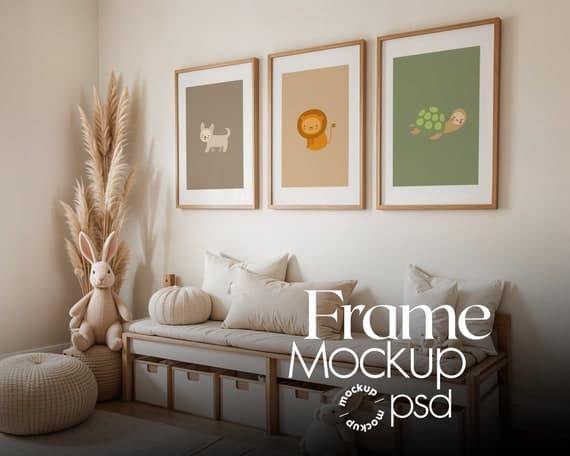
Why Mockups Do More Work Than Most Sellers Realize
When a buyer on Etsy is looking at a digital print, they cannot touch the paper or see the colors in person. When they are looking at a t-shirt, they cannot try it on or feel the fabric. What they have is your product photos. That is it.
A flat image of your design on a white background tells the buyer almost nothing. It does not help them picture the print on their living room wall. It does not help them imagine themselves wearing the shirt. It does not answer the unspoken question every buyer is asking: will this look good?
A well-composed mockup answers that question without the buyer having to work for it. A framed print shown hanging in a warm, well-lit living room tells the buyer immediately: this is the kind of art that goes in a real home. A t-shirt mockup showing the design on a person in a styled outdoor setting tells them: this is a wearable piece with a lifestyle attached to it.
The visual context does the selling. Your job is to provide that context, and to make sure it is consistent with the aesthetic of your brand and the price point you are targeting.
Scaling Mockup Creation Without Losing Your Mind
If you have twenty designs and you are expanding each into three product categories, you are now looking at sixty listings that each need multiple high-quality mockup images. That math gets overwhelming very quickly if you are generating each mockup manually.
This is exactly the kind of problem that bulk mockup generation solves. Instead of opening a design program for each individual product and manually placing your artwork, you can process a batch of designs across multiple templates in a fraction of the time.
Mockupanda was built specifically for this kind of workflow. You are not a professional photographer or graphic designer, you are a seller trying to run a shop, and you need tools that match that reality. Bulk generation means you can take the same design file and produce wall art mockups, apparel mockups, and product mockups in a single session rather than spending an entire afternoon on one design.
For cross-category expansion specifically, speed matters. The faster you can go from a finished design to a fully mockup'd set of listings, the faster you can start earning from that design across all its product formats.
Actionable takeaway: Before you list any cross-category product, ask whether your mockup images actually show the product in use. If your wall art listing shows the print floating on a plain white background, that is the first thing to fix. Context-driven mockups are not a nice-to-have. They are a conversion requirement.
SEO and Discoverability Across Categories
Expanding a design into multiple product categories is also an SEO strategy, not just a revenue strategy. Here is how to think about it.
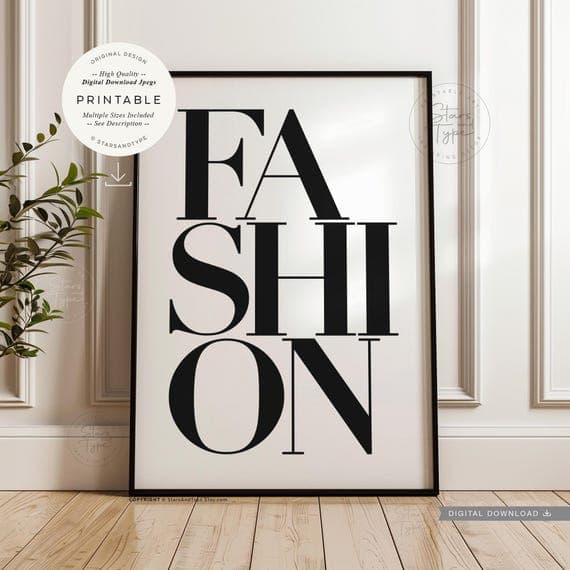
Each Listing Is a New Keyword Opportunity
Every listing you create is a new entry point into Etsy search. A wall art listing for a botanical print might rank for terms like botanical wall art, nature print for living room, or minimalist plant illustration. A t-shirt listing for the same design can rank for entirely different terms like botanical tee, plant lover shirt, or nature graphic tee.
These keyword pools rarely overlap. The people searching for them are different people, or the same person in a different shopping mode. By creating separate listings for each product category, you multiply your surface area in search without duplicating your SEO effort, because you are targeting genuinely different keywords in each listing.
This is one of the most underappreciated benefits of cross-category expansion. It is not just about selling more products. It is about showing up in more places when buyers are searching.
Writing Descriptions That Convert Across Categories
Do not make the mistake of copying your wall art listing description and pasting it into your t-shirt listing with a few words swapped out. Buyers in different categories have different questions and different objections.
A wall art buyer wants to know: what sizes are available, what file format do they get, how should they print it, and what kind of frame works well with it. A t-shirt buyer wants to know: how does the sizing run, what is the material, how should they wash it, and will the design look sharp on the actual garment.
Answer the specific questions your buyer in that category is asking. Write descriptions from scratch for each product type. It takes more time upfront but it pays off in better conversion rates and fewer return requests or complaints.
Actionable takeaway: When you create a new cross-category listing, open Etsy and search for the top-performing listings in that specific category. Read their titles, look at their tags if visible, and study how they describe their products. Let actual successful listings in that category inform your SEO approach.
Building a Cohesive Brand Across Product Types
One of the sneaky benefits of cross-category expansion is what it does for your shop's brand identity. When buyers land on your shop and see that your aesthetic carries consistently across wall prints, apparel, and accessories, it signals something important: this is a real brand, not just a collection of random listings.
Consistency in Visual Style Builds Buyer Trust
A shop that sells botanical wall prints, botanical tees, and botanical tote bags, all with the same design sensibility and the same quality of product photography, feels cohesive. It feels intentional. That coherence builds trust in a way that a shop full of visually unrelated products simply cannot.
This matters for conversion rates. A buyer who lands on one of your listings and then clicks through to your shop page is making a judgment call about whether to buy from you or keep looking. If they see a shop that looks like it has a clear identity and consistent quality across everything it sells, that judgment tends to go in your favor.
Consistency in your mockup style plays a big role here. If your wall art mockups use warm, natural light settings and lifestyle contexts, your apparel mockups should too. They do not have to be identical, but they should feel like they belong to the same world.
Using Text Overlays and Branded Imagery
Another tool worth knowing about, especially when you start running any kind of promotion or advertising for your expanded product line, is text overlays on your mockup images. Adding a sale message, a product tagline, or a seasonal callout directly onto a mockup image can significantly improve the performance of those images when used in ads or social posts.
This is a feature built into Mockupanda, and it is genuinely useful when you are promoting cross-category products. Instead of creating a separate graphic in a design tool just to add a line of text to a product image, you can do it as part of your mockup workflow. It keeps everything consistent and saves you yet another step in the production process.
Actionable takeaway: Look at your shop page as a visitor would. Does it look like one coherent brand, or does it look like a hodgepodge of unrelated listings? If your cross-category expansion is going to work at its full potential, the visual identity needs to hold together across all your product types.
Making Cross-Category Expansion a Repeatable System
The real payoff of this strategy is not from doing it once with one design. It is from turning it into a repeatable workflow that you apply to every strong design you create.
The Three-Step Expansion Workflow
The simplest way to implement cross-category expansion as a system is to build a checklist that every new design goes through before it goes live.
Step one: create the design. Step two: identify the two or three product categories that fit the design style. Step three: generate mockups for each category and create fully optimized listings for each.
By the time a design is published, it should already have at least two or three listings associated with it. If a design is not versatile enough to work in at least two categories, that is useful information too. It might mean the design is too niche, or it might mean you should think about whether it is worth the creative investment in the first place.
Tracking What Works Across Categories
Once you have been running cross-category expansion for a few months, you will start to see patterns. Certain design styles might perform well as wall art but barely move as apparel. Others might do the reverse. Pay attention to those patterns and let them inform both your design decisions and your expansion priorities.
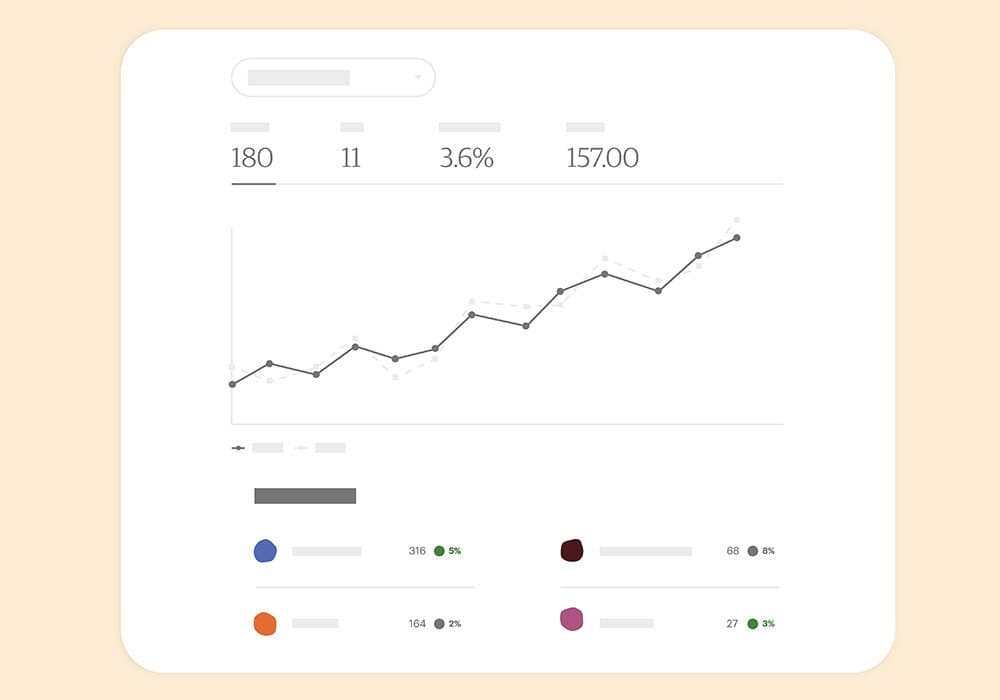
Etsy's shop stats give you per-listing data on views, favorites, and conversions. Export or track that data regularly and look at it by design, not just by listing. Which designs are generating revenue across all their product forms? Which ones are only pulling in sales in one category? That analysis tells you where to focus your creative energy going forward.
Actionable takeaway: Create a simple spreadsheet where each row is a design and each column is a product category. Mark which categories each design is currently listed in and which are still opportunities. Use your sales data to prioritize which gaps to fill first.
The Bigger Picture
Selling the same design across multiple product categories is not a shortcut or a gimmick. It is the kind of thoughtful leverage that separates sellers who build real income from Etsy from sellers who work constantly and still feel like they are running in place.
You already did the hard part when you created the design. Every additional product category you add is just you collecting the full value of work you already completed.
The keys to making it work are clear: keep listings separate and category-specific, price each product appropriately for its format, use professional mockup images that show the product in context, write descriptions that answer the specific questions buyers in each category are asking, and build a shop aesthetic that holds together across everything you sell.
If you take one design this week and expand it into just one additional product category with a properly optimized listing and clean mockup images, you have already started. That is all it takes to begin seeing how much revenue you have been leaving on the table.
Keep reading

How to Use Your Mockup Generator to Create Instagram Carousel Posts That Drive Traffic to Your Etsy Shop