How to Use Seasonal Room Mockups to Boost Your Etsy Wall Art Sales Year-Round

If you sell wall art on Etsy, you already know how competitive the marketplace is. Thousands of listings compete for the same search terms, and buyers make split-second decisions based almost entirely on your product photos. You might have the most beautiful print in the entire marketplace, but if your mockup looks dated, generic, or completely disconnected from what a buyer is thinking about right now, they'll scroll past you without a second thought.
The sellers who maintain steady sales throughout the entire year, not just during a holiday rush, have figured out something that most people overlook: timing your visual presentation to match what buyers are already picturing in their heads.
Seasonal room mockups do exactly that. When someone is shopping for wall art in October, they're mentally decorating a cozy, warm home. When they're browsing in May, they're imagining light, airy spaces with open windows. If your listing photos match that mental picture, you've already done half the selling work before they even read your title.
This guide is going to walk you through a complete seasonal mockup strategy, from understanding why timing your visuals matters to the specific room styles that work best in each season, to the practical workflow for keeping your listings updated without burning yourself out.
Why Seasonal Mockups Work (And Why Most Sellers Skip Them)
The psychology behind seasonal shopping
Buyers on Etsy are not just looking for a product. They're looking for a feeling. Wall art purchases are almost always emotionally driven, whether someone is redecorating after a big life change, sprucing up a space for the holidays, or finally treating themselves to something they've been pinning for months.
The season plays a massive role in shaping those emotions. Research consistently shows that consumer purchasing behavior shifts with the seasons, not just around major holidays but throughout the entire calendar. People feel different in January than they do in July, and those feelings directly influence what they want to buy and what imagery resonates with them.
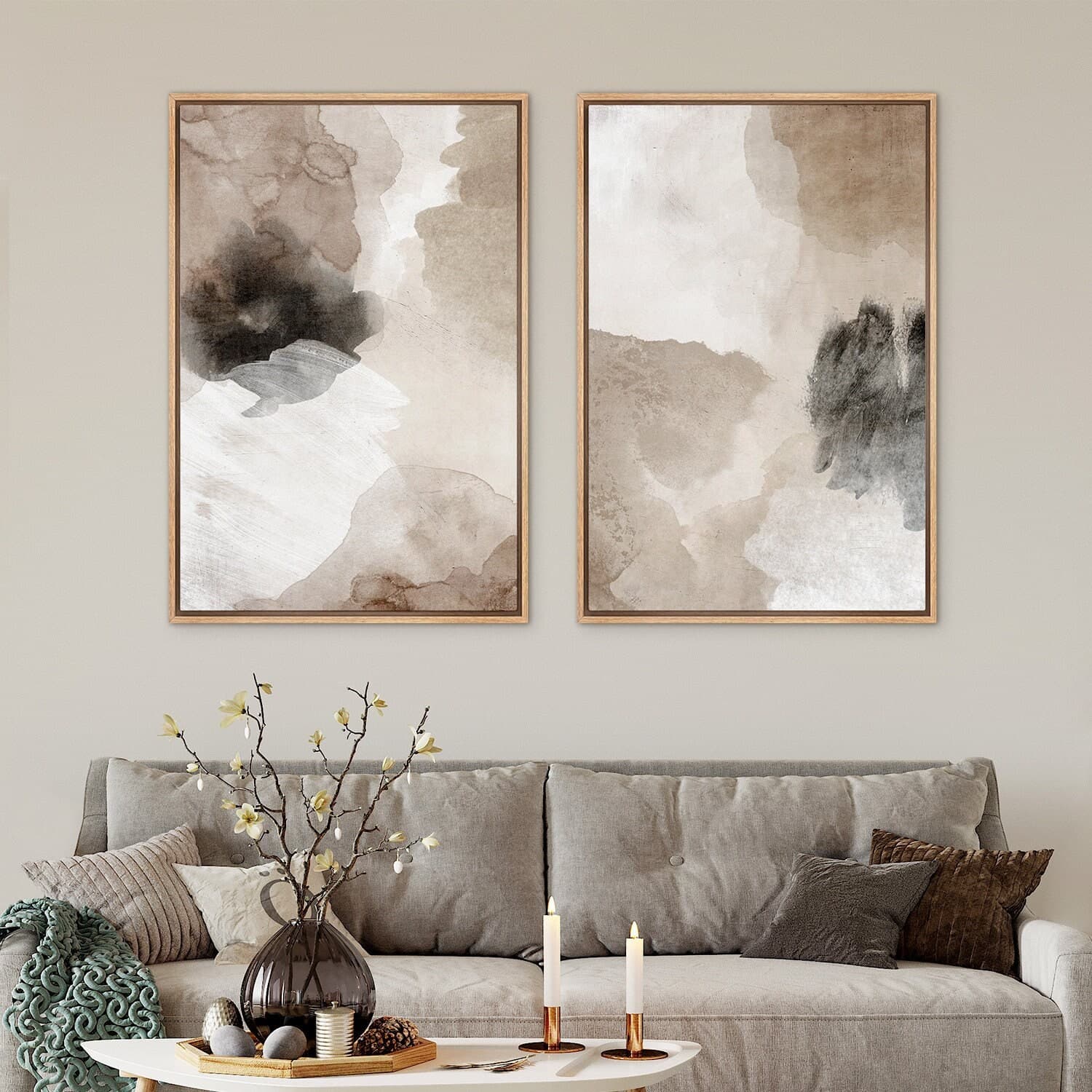
A mockup showing your print in a bright, sun-drenched Scandinavian living room with linen curtains and fresh greenery is going to feel aspirational and relevant in spring. That same mockup in November looks slightly out of place compared to one showing a warm, amber-lit room with a chunky knit throw and some candles nearby. Neither print changed. But the context changed completely, and context is everything in visual selling.
Why most Etsy sellers don't bother
The honest reason most sellers stick with one or two static mockups forever is that refreshing them feels like too much work. If you're creating mockups manually in Photoshop or sourcing them individually from stock mockup sites, updating every listing four times a year is genuinely a painful process. It can take hours just to get through a handful of designs.
This is a real barrier, and it's worth acknowledging. The sellers who do pull off a seasonal strategy tend to either have design skills or have found a tool that makes bulk mockup generation fast enough to actually be worth doing. If your current workflow takes 20 minutes per listing, you're going to update your photos once and never touch them again. If it takes 2 minutes, suddenly a quarterly refresh feels completely manageable.
Actionable takeaway: Start by auditing your current mockup workflow. Time yourself creating one mockup from scratch. If it takes longer than 5 minutes, your process is the first thing to fix before you build any seasonal strategy.
Building Your Seasonal Mockup Calendar
Mapping the four selling seasons for wall art
The retail calendar for Etsy wall art doesn't follow the meteorological seasons perfectly. It follows buyer psychology and shopping behavior. Here's how to think about it:
Winter and New Year (December through February): This is the biggest sales period for many wall art sellers thanks to holiday gifting, but January and February have their own energy too. Buyers are thinking about fresh starts, new year resolutions, and refreshing their spaces after the holiday decorations come down. Mockups in this window should cover both the cozy, festive warmth of December and the clean, resolution-inspired minimalism of January.
Spring (March through May): Buyers are craving brightness, light, and renewal. This is a strong period for botanical prints, pastel artwork, and anything with an airy, fresh feel. Room mockups with lighter walls, natural wood, and greenery perform particularly well.
Summer (June through August): Sales tend to dip slightly for indoor wall art during peak summer, but this is a smart time to position prints in spaces like bright studios, home offices, covered patios, and vacation-style interiors. Coastal, boho, and outdoor-adjacent aesthetics do well.
Autumn (September through November): This is arguably the second most powerful selling season after the winter holidays. People are nesting again, thinking about their interiors, and getting ready to refresh spaces before holiday gatherings. Warm tones, moody lighting, and hygge-adjacent room settings convert beautifully during this period.
Planning your mockup updates in advance
The key to making a seasonal strategy actually work is planning it like a content calendar rather than reacting to each season as it arrives. Ideally, you want your seasonal mockups live at least two to three weeks before the season starts, because that's when buyers are already beginning to mentally shift.
Create a simple calendar for yourself. Block out four refresh windows each year, and within each window, decide which listings need new mockup photos and what style of room setting to use. You don't need to update every single listing every season. Prioritize your top sellers, your highest-margin products, and any prints that are seasonally relevant by design (botanical prints for spring, warm abstract art for autumn, etc.).
If you have 50 listings, you might realistically update 15 to 20 of them each season, which keeps things manageable. The other listings can stay on their current mockups and rotate in on their own schedule.
Actionable takeaway: Build a simple 4-row spreadsheet with your seasons and your top 10 listings. Map out which room style you'll use for each listing in each season. Having this planned in advance removes the decision fatigue when refresh time comes.
Room Styles That Convert Best by Season
Autumn and winter room settings
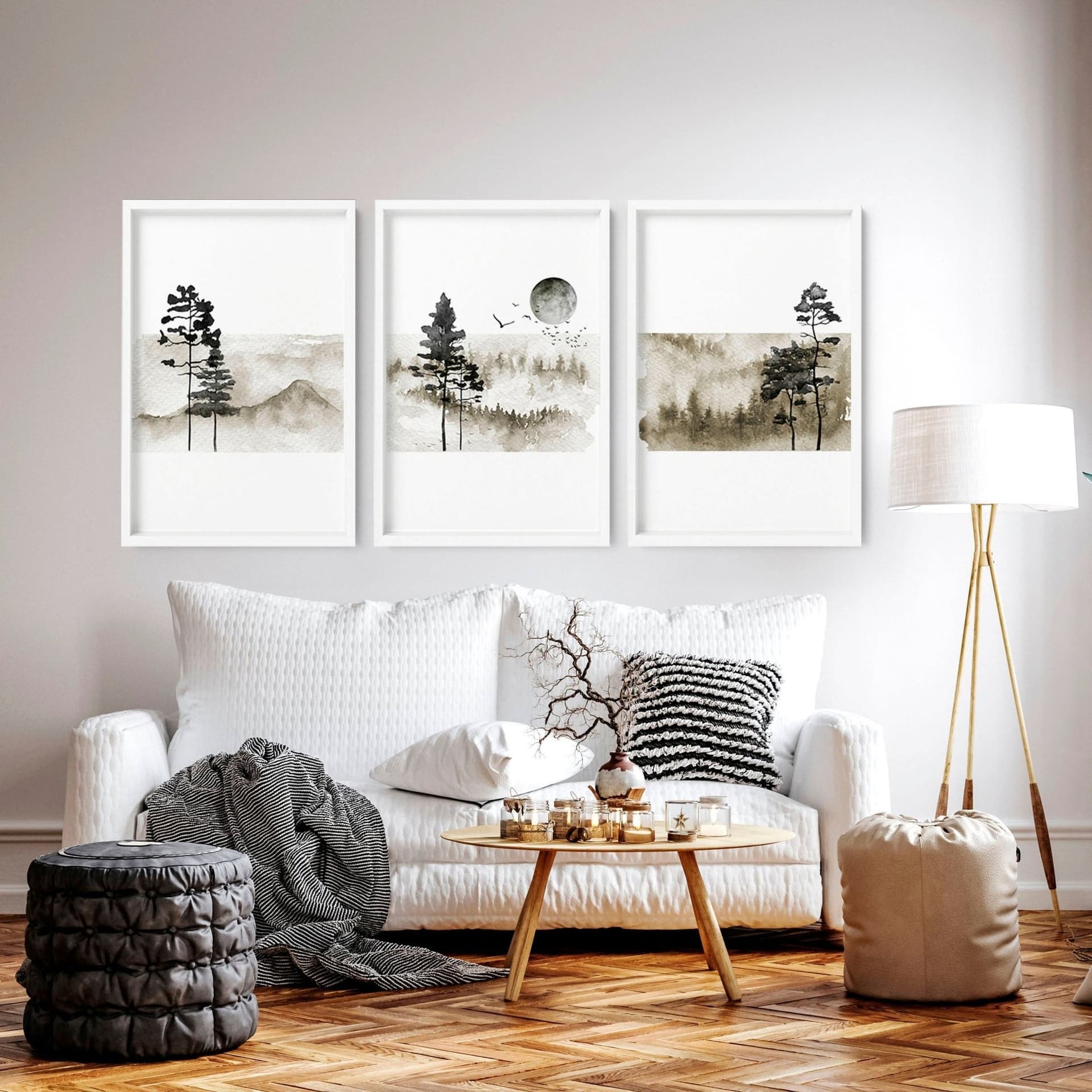
During the colder months, buyers respond to warmth, texture, and intimacy. The room settings that perform best for wall art in this period include living rooms with warm ambient lighting, dark or deep-toned walls (navy, forest green, warm grey), visible textiles like throws and cushions, and cozy bedroom setups with layered bedding.
For wall art specifically, a mockup showing a print above a fireplace mantle, beside a floor lamp in a reading nook, or on a dark-painted wall with some candlelight in the foreground can be incredibly effective. These settings tap directly into the nesting impulse that drives autumn and winter home purchases.
Avoid stark, minimal all-white rooms during this period. They tend to read as cold rather than aspirational, and buyers are in a warm, cocooning headspace.
Spring and summer room settings
From March onwards, the visual mood shifts significantly. Buyers want to see light, space, and freshness. The room styles that work here include bright living spaces with white or pale walls, rooms with large windows or visible natural light, spaces with plants, rattan furniture, or natural textures, and home office settings for motivational or typographic prints.
Linen textures, light wood, and greenery as styling props in the mockup background can make a huge difference. Even if your actual print is a bold, graphic design, placing it in an airy room context makes it feel like a spring purchase rather than something that belongs in a winter den.
Summer is also a good time to experiment with more casual, lifestyle-adjacent settings. A print shown in a bright kitchen, a sunlit bathroom, or a creative studio space can appeal to the slightly different buying mindset of summer shoppers who are often decorating for entertaining or leisure.
Actionable takeaway: For each of your top-selling prints, identify two contrasting room styles: one warm and cozy for autumn and winter, one bright and airy for spring and summer. Having this pair of mockups ready to swap in gives you a simple, effective seasonal refresh system.
How to Create Seasonal Mockups Efficiently
The bulk generation approach
If you're updating multiple listings across multiple seasons, the single biggest thing you can do to make this sustainable is to move to a bulk mockup generation workflow. Creating mockups one at a time is the bottleneck that causes most sellers to give up on seasonal refreshes entirely.
With a tool like Mockupanda, you can upload multiple print files at once and generate a batch of mockups across different room settings in a fraction of the time it would take to do them individually. This is genuinely important for a seasonal strategy, because the time investment is the main barrier. When a full seasonal refresh takes 30 to 40 minutes instead of several hours, it becomes something you'll actually do.
The workflow looks like this: gather your print files for the season's refresh, select the room mockup styles that match the current season's aesthetic, run the batch, download, and upload to Etsy. That's it. You're not rebuilding anything from scratch or opening Photoshop.
Using text overlays for seasonal promotions
One underused tactic that can significantly boost click-through rates during peak seasons is adding seasonal text overlays to your mockup images. This could be something as simple as a subtle banner that reads "Perfect holiday gift" in November, or "Refresh your space this spring" in March.
These overlays work particularly well for your first listing photo or for images you're using in Etsy ads, Pinterest pins, or Instagram posts. They give the image a promotional context without requiring you to redesign your product or create entirely separate marketing assets.
Mockupanda's text overlay feature makes this practical to do at scale. You can add your seasonal messaging directly to the mockup during the generation process, meaning your listing photos and your promotional visuals are essentially created in the same step.
Actionable takeaway: Plan one text overlay variation for each peak selling season. Keep the copy short, benefit-focused, and visually subtle so it enhances the image rather than cluttering it. Use these overlays in Etsy ads and social posts during your highest-traffic windows.
Optimizing Your Etsy Listings to Match Your Mockups
Updating titles and tags alongside your photos
Swapping out your mockup photos is a great start, but the sellers who really maximize seasonal traffic also update their listing copy at the same time. Etsy's search algorithm pays attention to how recently a listing was updated, and freshness can give you a small but real visibility boost.
More importantly, aligning your tags with seasonal search behavior drives organic traffic. In October and November, buyers are searching terms like "Christmas wall art gift," "holiday home decor print," and "cozy wall art for living room." In March, the searches shift toward "spring home decor," "botanical print wall art," and "fresh minimalist art." Your tags should reflect what buyers are actually typing right now, not what they were searching six months ago.
You don't need to overhaul every listing each season. Changing two or three tags on your top sellers to reflect current seasonal language can meaningfully improve impressions and clicks during peak windows.
Coordinating mockups with your shop banner and featured listings
Your individual listing photos don't exist in isolation. Buyers who land on your shop page will also see your shop banner, your featured listings section, and the overall visual tone of your store. When all of these elements tell a consistent seasonal story, the effect is significantly stronger than updating photos in isolation.
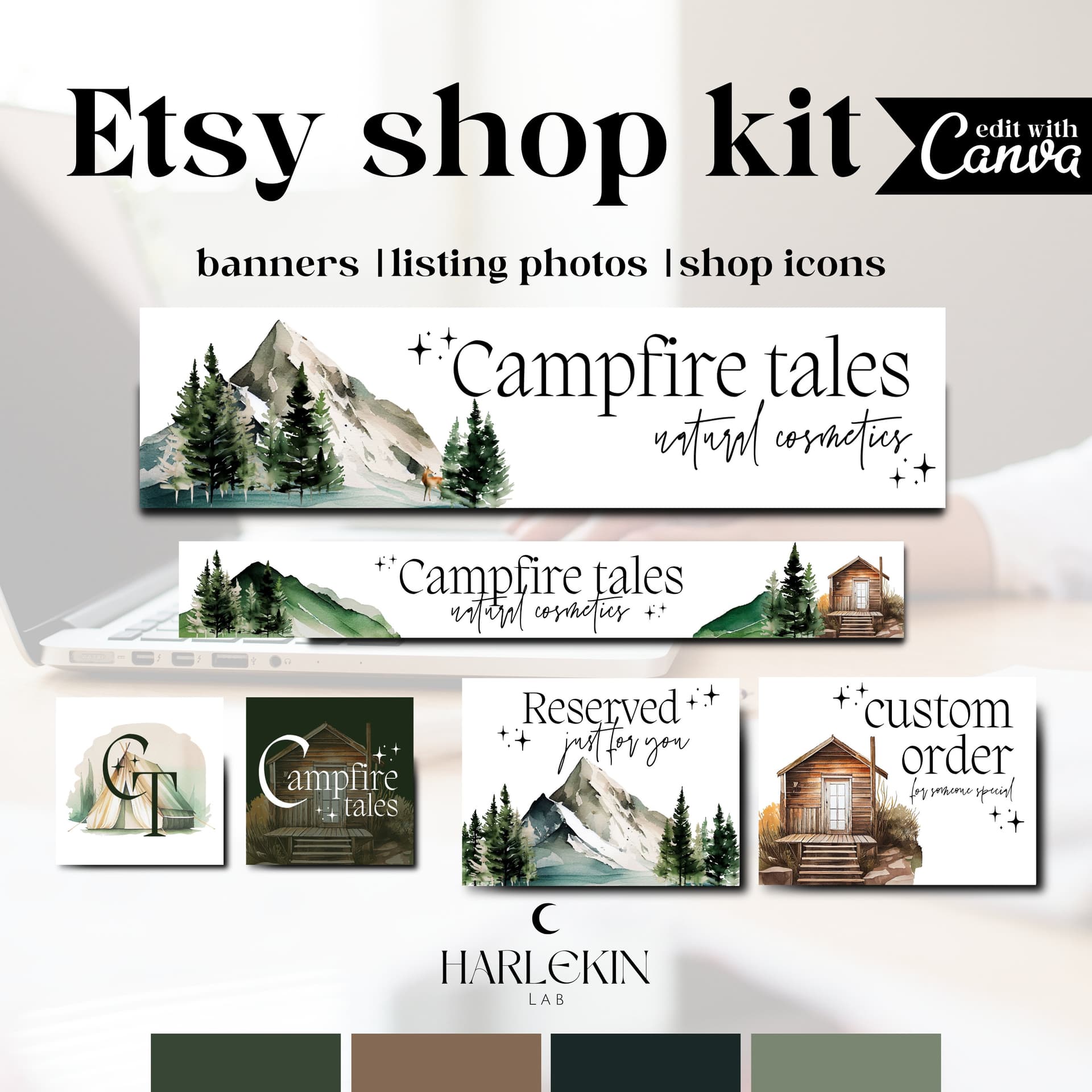
A quick win here is to update your shop banner seasonally. This doesn't have to be elaborate. A banner that reflects the current season's color palette and room aesthetic creates a sense of curation and intentionality that buyers respond to. It signals that this is an active, professionally run shop rather than one that was set up and abandoned.
If you sell multiple products, use the featured listings section to highlight the prints that are most seasonally relevant at any given time. Pairing your botanical prints with a spring-appropriate shop banner creates a cohesive first impression that can make a real difference to your conversion rate.
Actionable takeaway: Every time you do a seasonal mockup refresh, do a quick three-item audit: update your top-selling listing tags, refresh your shop banner, and reorder your featured listings to prioritize seasonal products. This whole process should take under 30 minutes and keeps your entire shop front looking current.
Measuring Whether Your Seasonal Mockups Are Actually Working
The metrics to track
Putting in the effort to refresh your mockups seasonally is only worthwhile if you can see whether it's having an effect. Etsy's Shop Manager gives you access to the data you need to evaluate this, though you have to know what to look for.
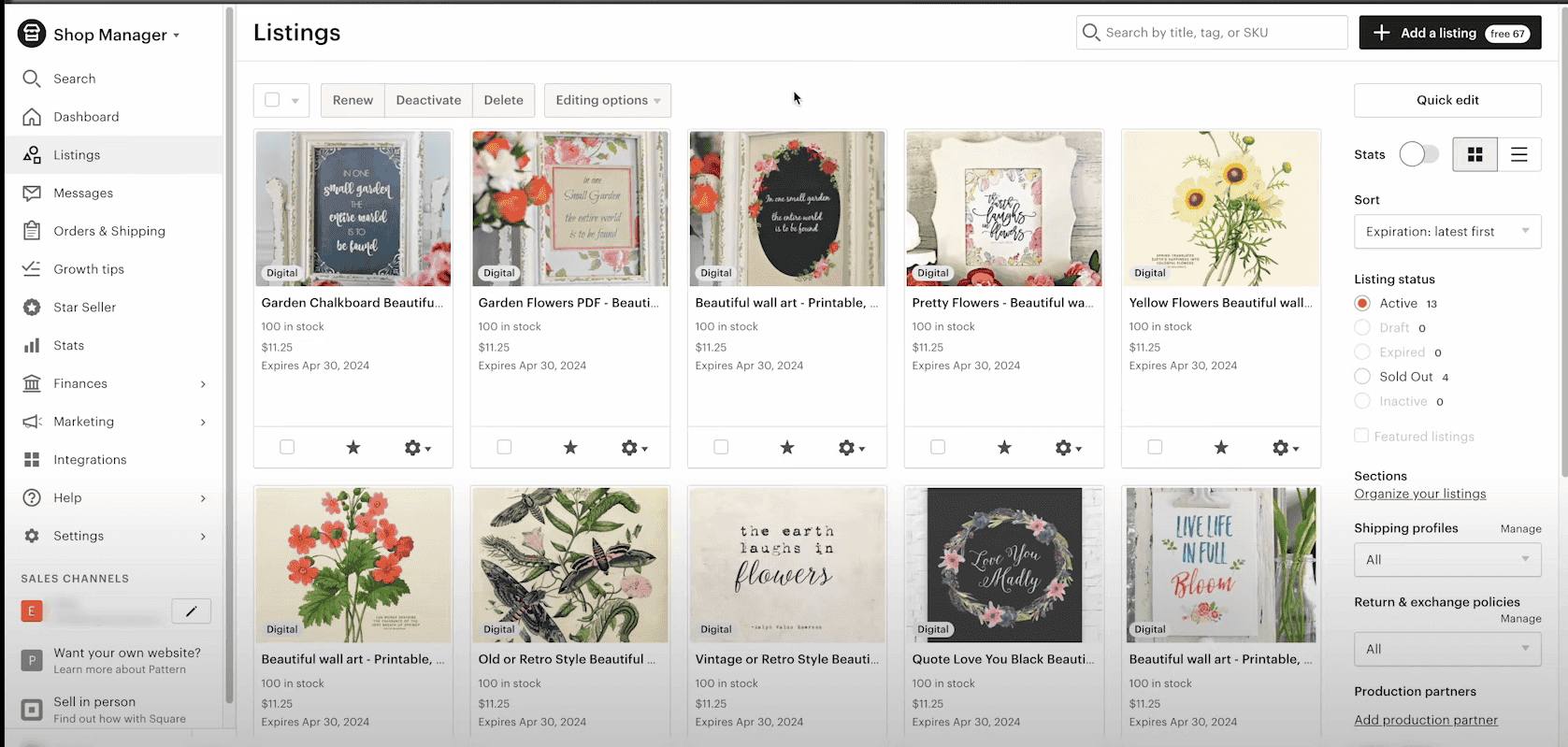
The primary metric to watch is your listing's click-through rate, which Etsy calls "visits" relative to impressions in your Stats section. If a listing is appearing in search results but not getting clicked, your thumbnail photo is the most likely culprit. After updating your mockup, check whether the click-through rate on that listing improves over the following two to three weeks compared to the same period the previous season.
Conversion rate (orders divided by visits) is the other number worth tracking. A better mockup should not only drive more clicks but also reduce the gap between curiosity and purchase, because buyers who click already feel like the product fits their space.
Iterating on what works
Not every seasonal mockup style is going to land equally well for your specific audience. Over time, you'll start to see patterns. Maybe your customers respond much more strongly to bedroom settings than living rooms. Maybe the minimal Scandinavian aesthetic consistently outperforms the warmer, darker room styles even in autumn.
This is useful data, and it should inform how you allocate your mockup creation time each season. If one room style consistently drives higher click-through rates for your shop, lean into it rather than mechanically rotating through every style you can find.
Keep a simple record of which mockup styles you used on each listing and when, alongside the before and after stats. Even a basic spreadsheet tracking visits and conversion rates by quarter gives you something concrete to build your strategy on.
Actionable takeaway: Set a reminder two weeks after each seasonal mockup refresh to pull the click-through rate data for the listings you updated. Compare it to the previous period. This doesn't need to be sophisticated analysis, you just need to know whether the needle moved so you can do more of what works.
Putting It All Together
A seasonal mockup strategy is one of the highest-leverage things you can do for your Etsy wall art shop because it costs relatively little time once you have the right workflow in place, and it keeps your listings feeling current and relevant to buyers year-round.
The core idea is simple: buyers are already picturing a seasonal version of their home when they shop. Your job is to show them your print in that home, not in some generic setting that could have been created at any point in the last three years.
Start small. Pick your five best-selling listings and commit to updating their mockup photos before the next season starts. Build a simple calendar. Find a mockup generation workflow that lets you do this quickly enough that it doesn't feel like a burden. Then expand from there as the habit takes hold.
The sellers who keep their visual presentation aligned with what buyers are feeling right now are the ones who see steady, year-round sales instead of feast-and-famine cycles tied to a single holiday rush. That consistency is worth building toward, and seasonal mockups are one of the most practical ways to get there.
Mockupanda was built specifically to make this kind of workflow fast and affordable for print-on-demand sellers. If refreshing your mockups seasonally has felt like too much work in the past, it's worth seeing whether a better tool changes the equation entirely.
Keep reading
How to Choose the Right Mockup Style for Your Etsy Niche: Boho, Minimalist, Maximalist, and More
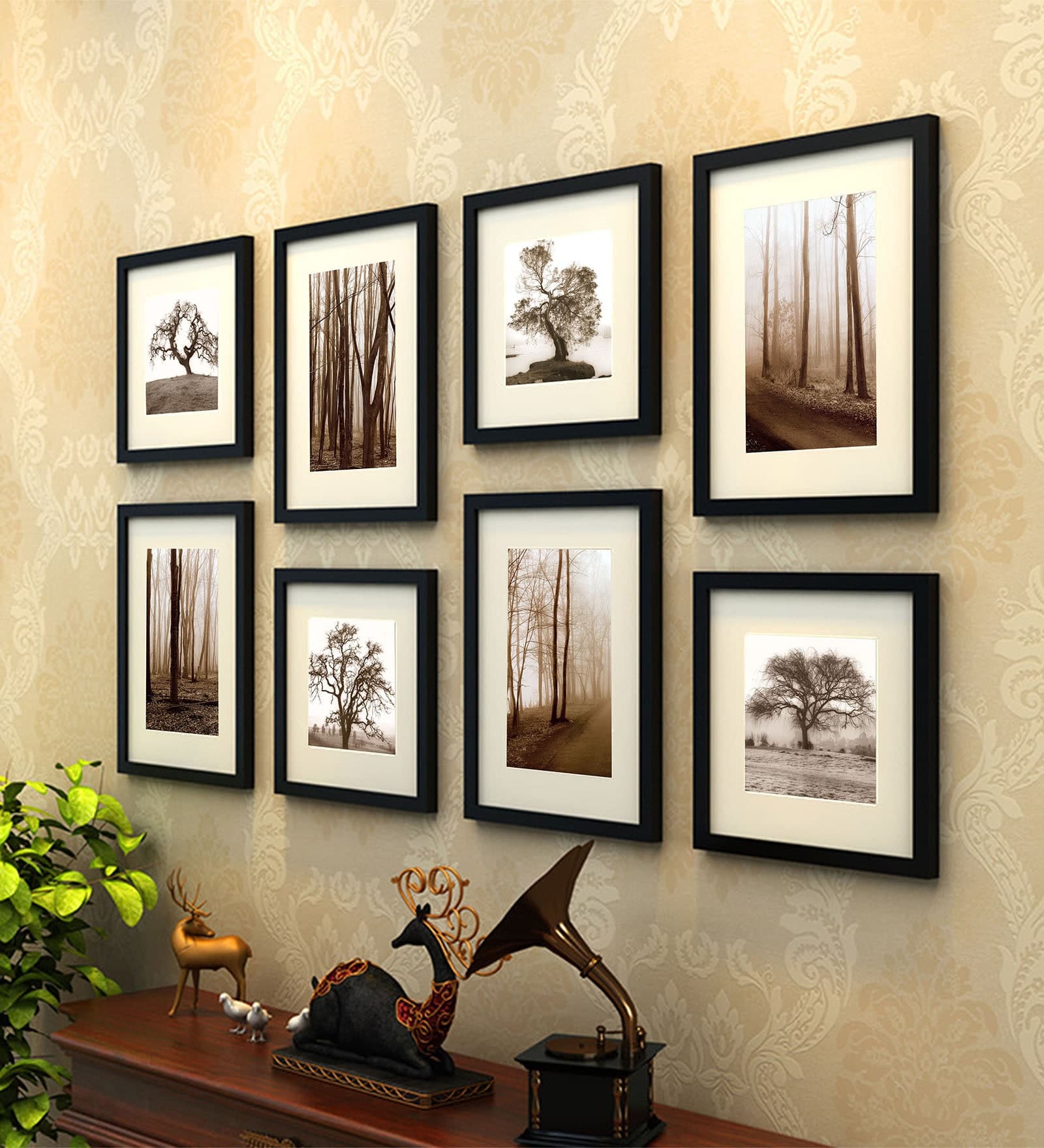
How to Showcase Poster Sets on Etsy Using Gallery Wall Mockup Templates